Are You Using the Mental Health Support You Already Have?
When was the last time you looked at your mental health the same way you look at your physical health?
Not just during Mental Health Awareness Month. Not just when stress peaks. Not just when burnout is already affecting your work, relationships, or sleep.
What if one of the biggest barriers to better mental well-being is not motivation, but visibility? What if support is already available to you through daily habits, professional care, and insurance benefits you may not be using?
That is the conversation worth having in May 2026 and beyond.
Why Do We Still Treat Mental Health Like a Seasonal Topic?
Mental Health Awareness Month is valuable because it brings attention to an issue that touches every part of life. But should mental health really get our attention only once a year?
Mental well-being shapes how you handle pressure, communicate with others, make decisions, recover from setbacks, and stay present in your personal and professional life.
So here is the real question: if mental health affects how we live and work all year, why do so many people wait until things feel unmanageable before they check in on it?
Being mentally healthy does not mean you never feel stressed, anxious, sad, or overwhelmed. It means you have tools, support, and space to respond before those feelings start running the show.
That shift matters. It turns mental health from a crisis topic into a care practice.
What Does Year-Round Mental Health Support Actually Look Like?
For many people, the idea of “taking care of mental health” sounds vague. Does it mean therapy? Better work-life boundaries? More sleep? Less screen time? A day off?
The honest answer is yes, sometimes all of the above.
Mental wellness usually is not built through one major change. More often, it comes from small, repeatable choices that help you stay steady over time.
Instead of asking, “What big reset do I need?” a better question may be: “What can I do consistently that helps me feel more grounded?”
Which Daily Habits Help More Than People Think?
We often underestimate the basics because they seem too simple. But simple does not mean small.
Are You Moving Enough to Support Your Mood?
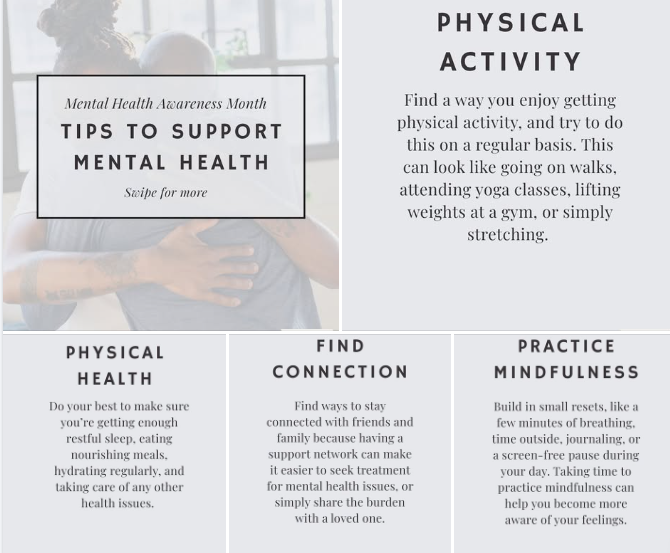
Regular movement can lower stress and improve your mood. That does not mean you need a perfect routine or long workouts.
Could a short walk between meetings help? Would stretching in the morning make your day feel more manageable? Could a few minutes of movement give your mind the reset it needs?
Walking, yoga, dancing, strength training, or even brief movement breaks during the day can all support emotional balance.
Are You Protecting the Basics or Letting Them Slide?
How often do sleep, hydration, meals, and recovery time get pushed aside when life gets busy?
Mental health and physical health are closely linked. When you are running on poor sleep, skipping meals, ignoring existing health needs, or moving through the day without pause, emotional strain usually gets harder to manage.
Sometimes the most useful question is not “Why am I feeling off?” but “What basics have I stopped supporting?”
Who Are You Staying Connected To?
Connection is not extra. It is part of mental well-being.
Who do you talk to when life feels heavy? Who checks in on you? Who do you check in on?
A text, phone call, coffee break, or quick conversation can interrupt isolation and create a sense of support. In a time when many professionals are juggling packed schedules and digital overload, real connection still matters.
Are You Giving Your Mind Any Room to Reset?
What happens when you move from task to task without a break?
Short mental resets can help regulate stress before it builds. That might mean stepping outside, journaling for five minutes, doing a breathing exercise, or putting your phone away for a short stretch.
These are not dramatic solutions. They are small practices that help you stay more regulated and aware.
When Do Daily Habits Stop Being Enough?
This is an important question, especially for individuals who are used to pushing through.
Self-care matters, but it is not always enough on its own. So how do you know when it may be time for professional support?
If your mental health is starting to interfere with work, sleep, relationships, focus, motivation, or everyday responsibilities, that is a sign worth taking seriously.
You may want to reach out to a licensed mental health professional if you are dealing with:
- ongoing anxiety or sadness
- persistent overwhelm
- burnout or emotional exhaustion
- trouble functioning day to day
- difficulty coping with a major life event
- changes in concentration, sleep, or motivation that are not improving
Why wait until things get worse if support now could help you sooner?
Early care is not overreacting. In many cases, it is the most practical step you can take.
Are You Overlooking Mental Health Benefits You Already Have?
Here is a question that deserves more attention: how many people assume mental health support is out of reach without ever checking what their plan includes?
A lot of individuals know their insurance covers annual physicals/wellness visit or prescriptions. Far fewer know the full picture of their mental health benefits.
That gap matters because uncertainty often delays care. People assume therapy will cost too much. They do not know where to start. They are unsure whether virtual care is covered.
And because of that, they wait.
Many health plans include resources that can help with stress, sleep, and everyday mental wellness, and you don’t have to navigate them alone.
What Might Your Insurance Plan Already Cover?
The answer depends on your plan, but many people have more support available than they realize.
Does Your Plan Include Therapy or Counseling?
Many health plans cover therapy or counseling sessions, whether in person, virtual, or both.
If you have been thinking about speaking with someone, have you checked whether in-network options are available? Have you looked into telehealth if convenience has been the main barrier?
For many people, therapy is one of the most effective starting points because it offers guidance, structure, and tools you can apply in daily life.
Could Telehealth Make Getting Help Easier?
What if the obstacle is not willingness, but logistics?
Telehealth can remove some of the friction that keeps people from getting support. It may reduce travel time, make scheduling easier, and let you access care from home or during a break in the workday.
If finding time has been the reason you have delayed care, could virtual support be the option that finally fits?
Do You Have Access to Psychiatry and Medication Coverage?
Some plans also cover psychiatric consultations and prescribed medications when appropriate.
Not everyone needs medication support, but for those who do, coverage can make treatment more affordable and more sustainable. Pharmacy benefits may also play an important role here.
The better question is not whether every option applies to you. It is whether you know which options are available if you need them.
Are You Using Your Employee Assistance Program?
If you get benefits through your employer, do you know whether you have access to an Employee Assistance Program, or EAP?
Many EAPs offer confidential short-term counseling, mental health referrals, and support for personal or work-related challenges. They can be a helpful first step when you are not sure where to begin.
So why are EAPs still so underused? Often, it is simply because people do not know they exist or assume they are only for extreme situations.
What About Digital Wellness Tools?
Does your plan include meditation apps, stress management platforms, online coaching, or habit-building tools?
These resources are not a replacement for licensed care. But they can be helpful between appointments, during stressful seasons, or as a lower-pressure place to start building healthier routines.
If support feels easier to access through an app or digital program first, that still counts as a meaningful step.
Are Wellness Perks Part of Your Mental Health Strategy?
Mental health support is not always labeled in obvious ways.
Some plans include free or discounted gym memberships, reimbursement for fitness activities, wellness coaching, or other preventive health resources. These benefits can make healthy habits easier to maintain, which can help support emotional well-being over time.
What wellness benefit have you ignored simply because you did not connect it to mental health?
What Keeps People From Using the Support They Have?
In many cases, the challenge is not a total lack of resources. It is friction.
People may not know:
- what their plan covers
- how to find in-network providers
- whether telehealth is included
- if medication support is covered
- whether an EAP is available
- what wellness tools they can use
When the process feels confusing, people put it off. When people put it off, stress builds.
So maybe the more useful question is this: are we making mental health support easy to understand and easy to use?
How Can You Make Better Use of the Benefits Available to You?
You do not need to figure everything out at once. A few simple steps can make the process feel more manageable.
1. Have You Reviewed Your Plan Recently?
Look at what is covered for therapy, telehealth, psychiatry, prescriptions, wellness programs, and employer-based support.
2. Have You Checked In-Network Options?
In-network providers often help reduce out-of-pocket costs and simplify billing.
3. What Is the Easiest Place for You to Start?
Could you begin with a telehealth visit? An EAP session? A conversation with your primary care provider? A call to member services?
Start with the point of least resistance.
4. Are You Using Tools Between Appointments?
Digital wellness resources can help support consistency, reinforce healthy routines, and help you stay engaged between visits.
5. Are You Choosing Support That Fits Real Life?
The best mental health plan is not the most ideal one on paper. It is the one you can actually sustain.
That may mean virtual therapy instead of commuting to appointments. It may mean shorter check-ins. It may mean using a mix of formal care and small daily habits.
The right question is not “What should work?” It is “What will I realistically keep doing?”
So What Should You Take Away From This?
Mental Health Awareness Month should spark more than awareness. It should prompt action.
The bigger lesson is that mental health support works best when we stop treating it as an emergency-only issue. Daily habits matter. Professional care matters. And understanding your insurance and workplace benefits matters too.
Many people may already have meaningful support within reach. They just have not been shown how to find it, use it, or trust that it is there for them.
Final Thought
Mental Health Awareness Month is an important reminder, but the real goal is not one month of attention. It is building support that lasts all year.
Mental well-being is shaped by daily habits, meaningful connection, timely professional care, and access to the benefits already available to you. When those pieces work together, support becomes easier to reach and easier to sustain.
If you are unsure what your current coverage includes, this is a good time to check. Understanding your options can be the first step toward getting the care and support you deserve.
What mental health benefit or wellness resource have you found most helpful in your own routine?
If you have questions about your plan, don’t hesitate to reach out. We’re here to help you
For more guidance, CLICK HERE for a FREE consult—don’t leave your healthcare to chance!
Stay healthy and informed.
#HealthCoverage #HealthOptionsNYs #MentalHealthMatters #EmployeeWellbeing #WorkplaceSupport #MentalHealthAwareness #SelfCare #ProfessionalCare #HealthyHabits #MentalHealthResources
Personalized Assistance with Health Options NY
Looking for one-on-one help? We’re here to guide you every step of the way! As an independent insurance agency partnered with multiple carriers in New York, we’re ready to help you find the perfect plan and prescription drug coverage as you transition to Medicare.
Our services are completely free for you!
CLICK HERE to get started.
Stay informed with our LinkedIn Medicare Mastery Newsletter! Tailored for seniors, HR professionals, and small business owners. Subscribe here.
Our goal is to safeguard not just your well-being and health, but also your peace of mind.
#MedicareAtWork #HealthcareTransition #MedicareOptions #EmployeeBenefits #MedicareSpecialist #StrategicHealthPlanning #BenefitsConsultation #NavigatingMedicare #MedicareAdvantage #PrescriptionCoverage #MedicarePartD #Medicare101 #Turning65 #SeniorHealthcare #MedicareEnrollment #LateEnrollmentPenalties #MedicareForSeniors #MedicareSupplementPlans #SocialSecurityBenefits #HealthOptionsNY #WellnessJourney
At HealthOptionsNY, our main priority is to provide insight into Medicare for individuals, nonprofits, and small businesses in New York, all at no extra charge. We firmly believe that knowledge serves as the foundation for making informed decisions.
OUR SERVICES INCLUDE:
EDUCATIONAL GUIDANCE & CONSULTATION
We simplify the complexities of Medicare’s various segments (Parts A, B, C, D, and Medigap) and help differentiate between Original Medicare and Medicare Advantage plans clearly. Ask us about our free workshop Medicare Mondays.
TAILOR-MADE ADVICE
Depending on your unique situation, we’ll guide you on whether it’s best to postpone Medicare enrollment or start with it as soon as you’re eligible.
SEAMLESS MEDICARE TRANSITION
When it’s time to make the switch to Medicare, we ensure a smooth transition, providing detailed insights into the insurance landscape. We can also assist with signing up for Medicare Parts A & B.
CONTINUOUS ASSISTANCE
Our commitment to your Medicare needs is ongoing, ready to adapt our support as your situation or the available plans evolve.
FREE EXPERTISE
Our professional advice comes at no cost to you. Should you choose a supplemental plan through us, the insurance provider compensates our agency directly.
EMPLOYER OPPORTUNITY
- Assist employees in making decisions tailored to their individual needs.
- Achieve cost savings by transitioning employees to Medicare.
- Minimize the administrative workload for the Human Resources team.
EMPLOYEE OPPORTUNITY
- Employees aged 65 and over are empowered with the choice of their own healthcare plans.
- Medicare presents a range of comprehensive and cost-effective plan options tailored to individual needs.
- Expert licensed agents offer personalized guidance in selecting the most suitable Medicare plan.
Connect with US today and unlock the benefits of our trusted partnership. For questions and support, please contact: Susan Diamond | Independent Broker: 845-594-4818 | susan@healthoptionsny.com | www.healthoptionsny.com
Collaborating with HealthOptionsNY offers a holistic approach to supporting your clients and/or employees’ Medicare needs, ensuring comprehensive and personalized care and peace of mind.